Learn how to choose bathroom cabinets and storage that suit your space, layout, and needs, with practical tips for homeowners planning a renovation.
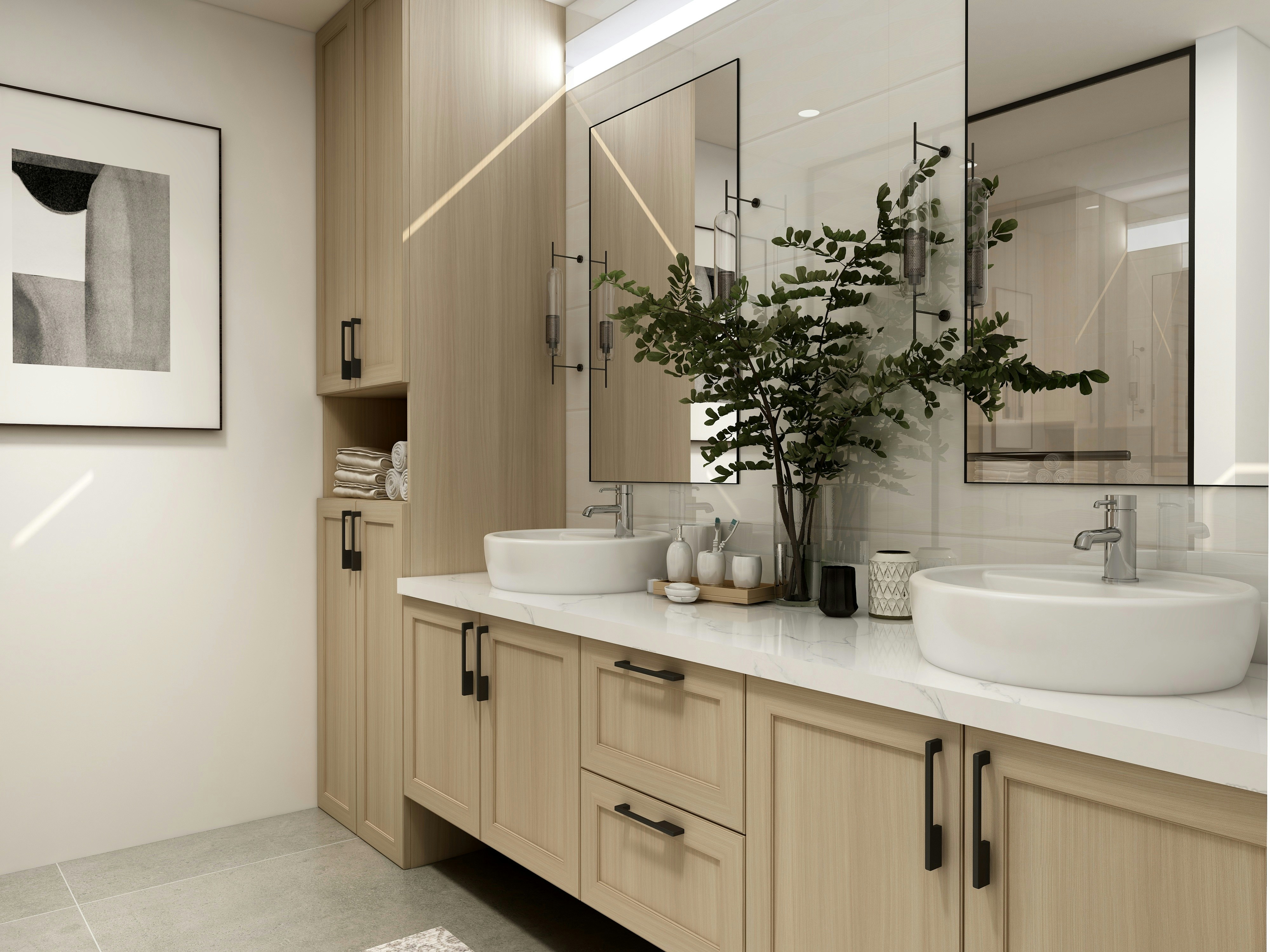
Bathroom cabinets and storage shape how a bathroom looks, feels, and functions day to day. Beyond holding essentials, they define layout, influence movement, and affect how easily the space stays organised.
For homeowners planning a renovation or upgrade, the right cabinet choices depend on the size of the bathroom, the available wall space, and how the room is used. A guest bathroom will have different storage needs compared to a shared family space or an ensuite.
This guide breaks down the main cabinet options, layout considerations, and design approaches to help you make informed decisions.
Start With How the Bathroom Is Used
Before choosing styles or finishes, it helps to look at how the space is used.
A main bathroom often needs layered storage. This includes space for towels, toiletries, cleaning products, and everyday items. In contrast, a powder room may only need minimal concealed storage to keep surfaces clear.
Shared bathrooms benefit from divided storage, such as double vanities or separate drawer zones. This reduces clutter and keeps daily routines efficient. Guest bathrooms can prioritise simplicity, with enough storage for essentials without overcrowding the room.
Understanding usage first makes it easier to decide how much cabinetry is needed and where it should go.
Common Types of Bathroom Cabinets
Bathroom storage usually comes from a combination of cabinet types rather than a single unit.
Vanity Cabinets
Vanities are the most common storage feature. They sit beneath the sink and combine plumbing access with drawers or cupboards.
Single vanities suit smaller bathrooms, while double vanities work well in wider layouts. In larger rooms, a compact vanity can look undersized, so proportions matter.
Drawers within vanities tend to be more practical than deep cupboards, as they allow easier access to smaller items.
Tall Cabinets and Linen Towers
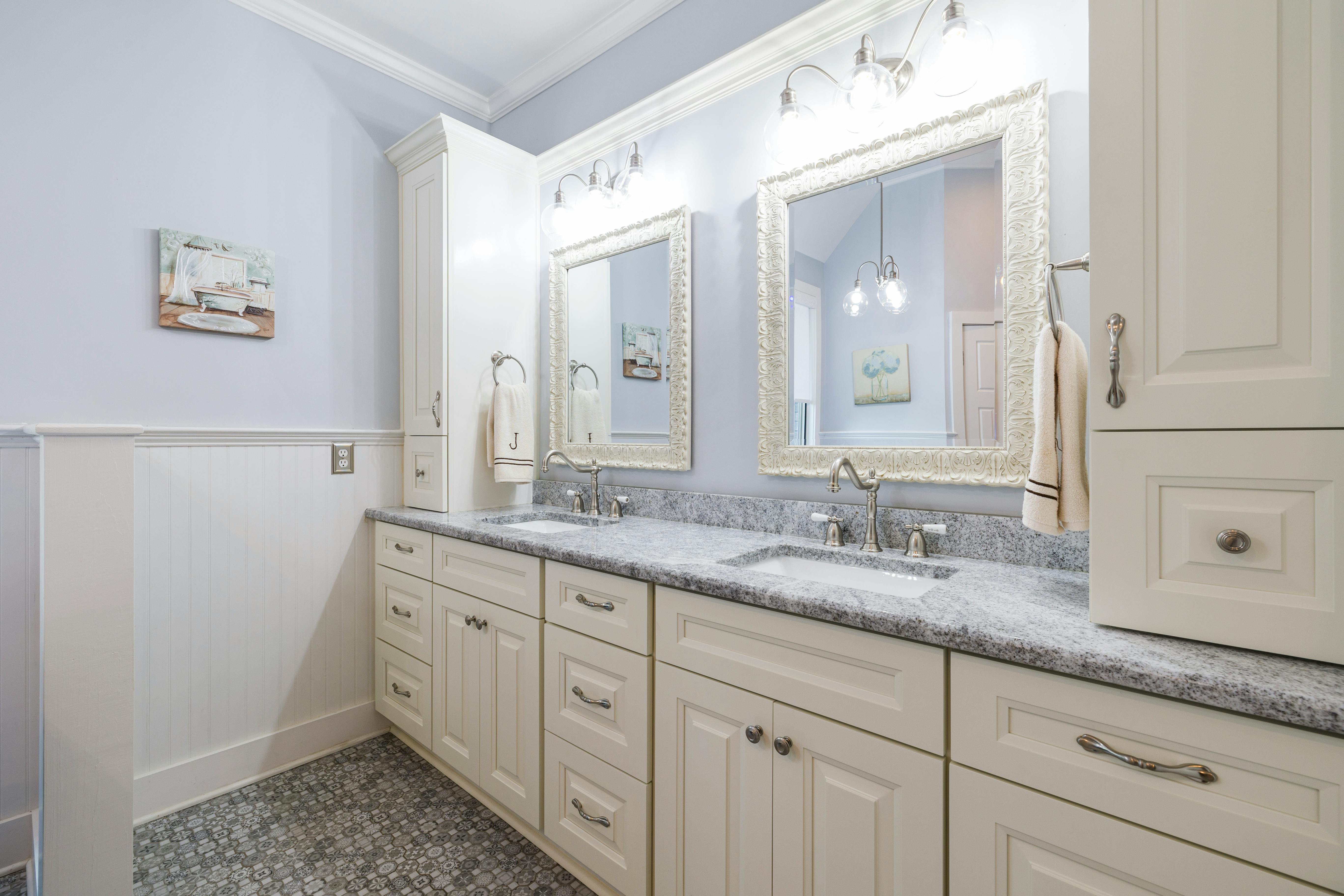
Tall cabinets are useful when there is limited linen storage elsewhere in the home. These units run vertically, making use of wall height without taking up much floor space.
They are often placed near the entrance or beside a vanity. In long bathrooms, a tall cabinet can help balance the layout while providing substantial storage for towels and bulk items.
Wall-Mounted and Floating Cabinets
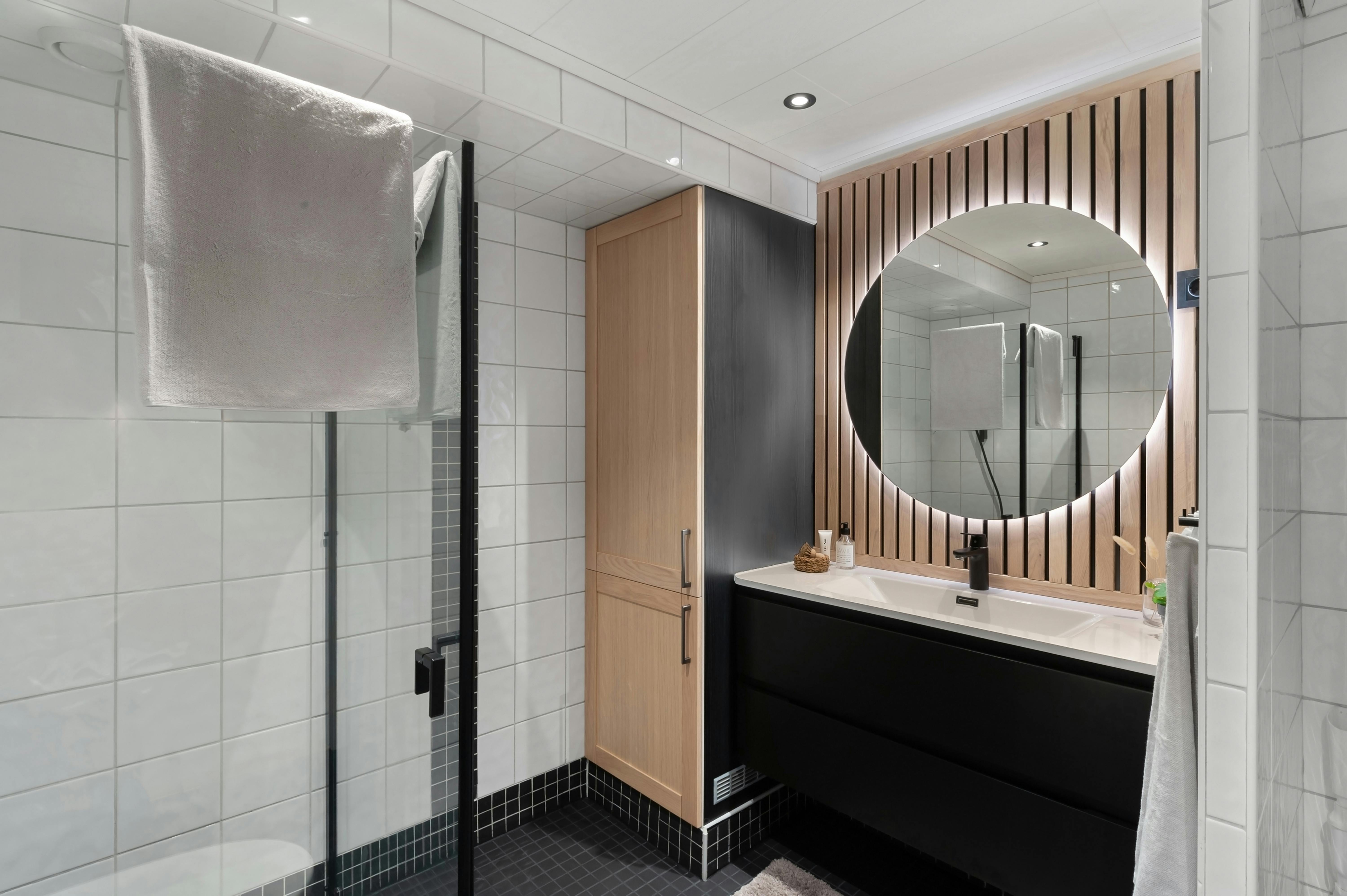
Wall-mounted cabinets create a lighter visual effect and make floors easier to clean. They work particularly well in smaller bathrooms where visual space matters.
Floating vanities are a common choice in modern renovations, offering storage while maintaining a streamlined look.
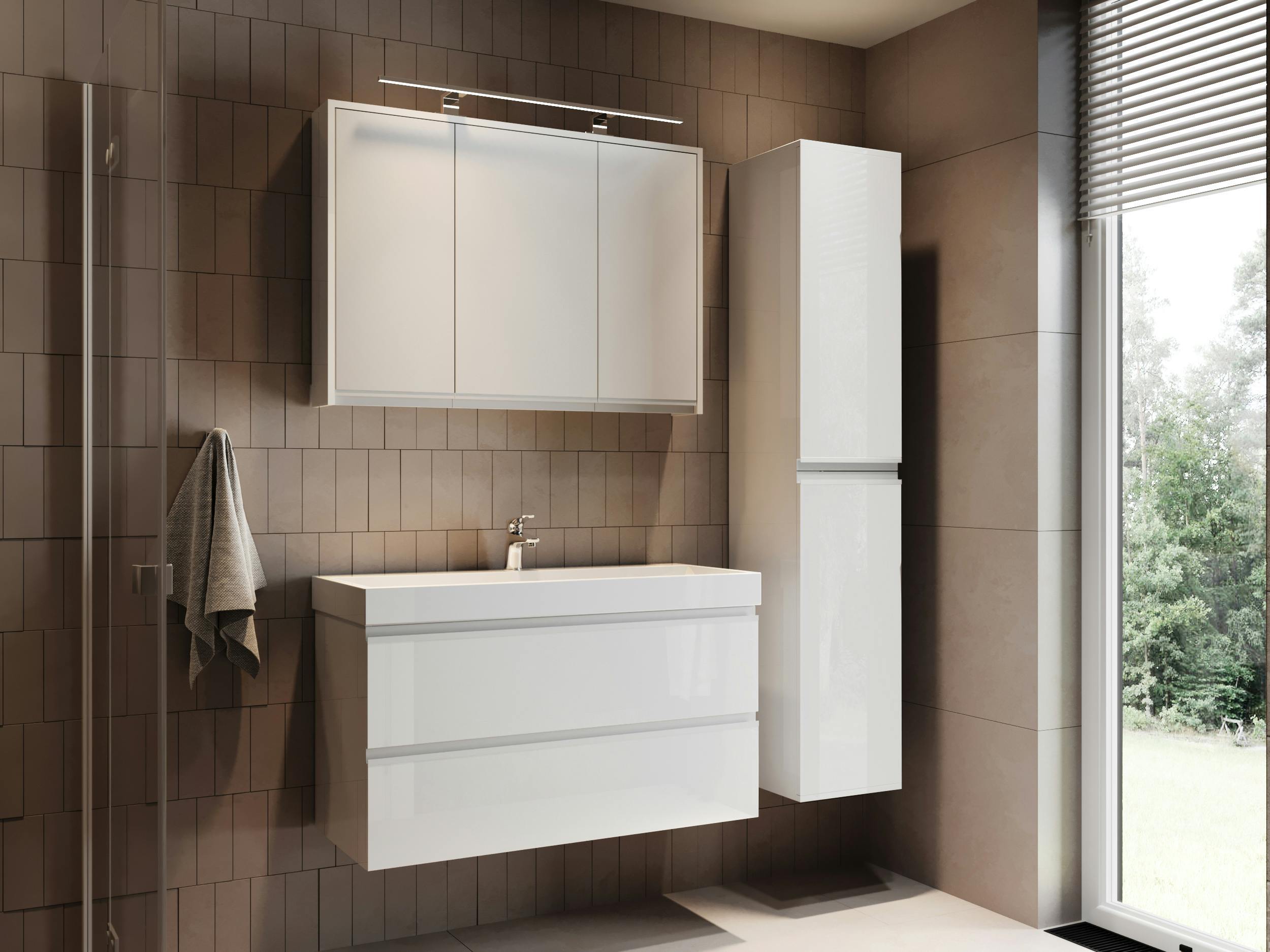
Medicine Cabinets
Mirrored cabinets above the sink offer concealed storage without using additional wall space. Larger versions can span the width of the vanity, increasing storage while maintaining a clean appearance.
These are especially useful in compact bathrooms where every surface needs to serve more than one purpose.
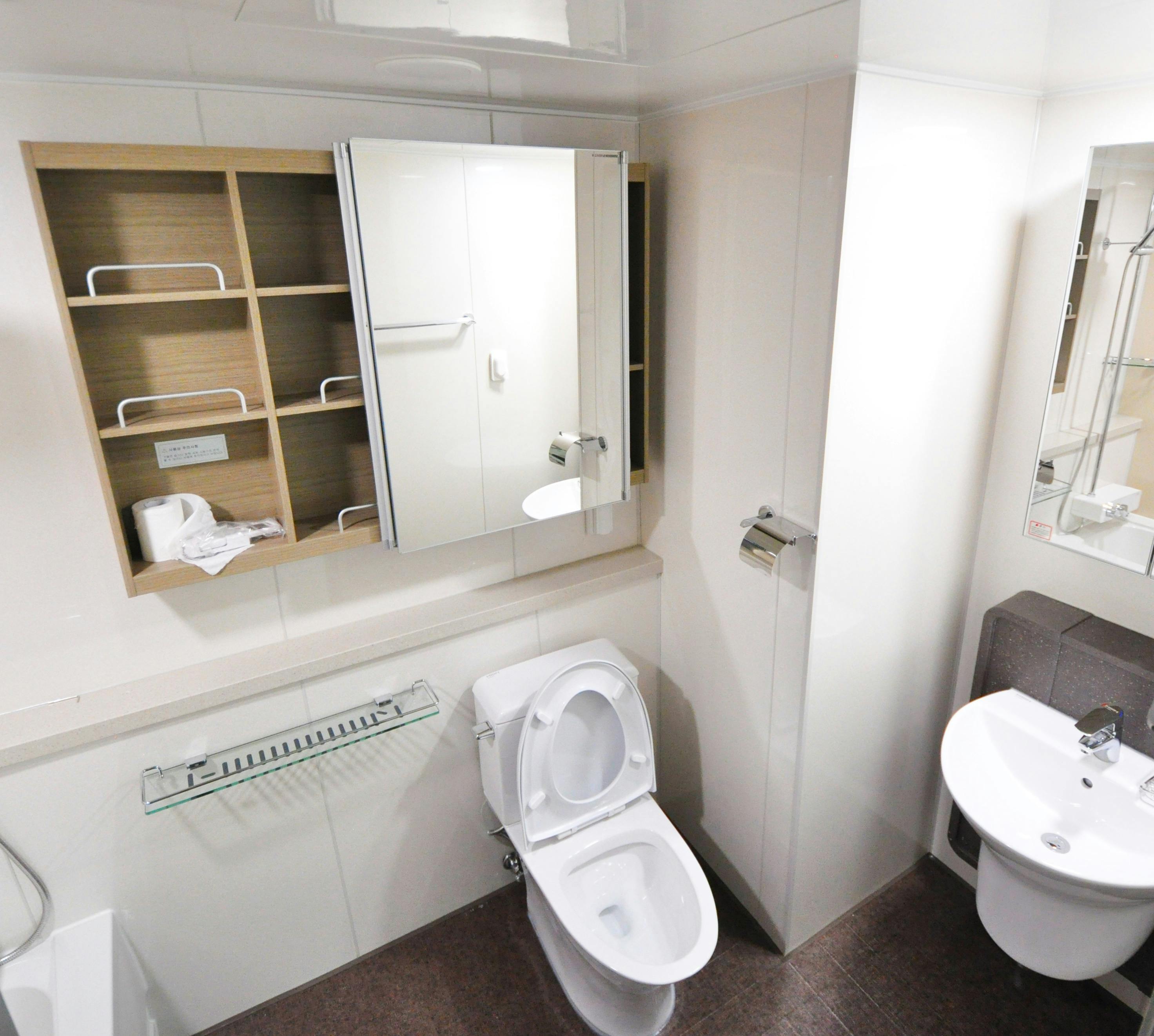
Recessed Storage
Recessed cabinets are built into the wall, allowing storage without projecting into the room. This approach suits narrow bathrooms or layouts with limited clearance.
When planned early in a renovation, recessed storage can significantly increase capacity without affecting movement within the space.
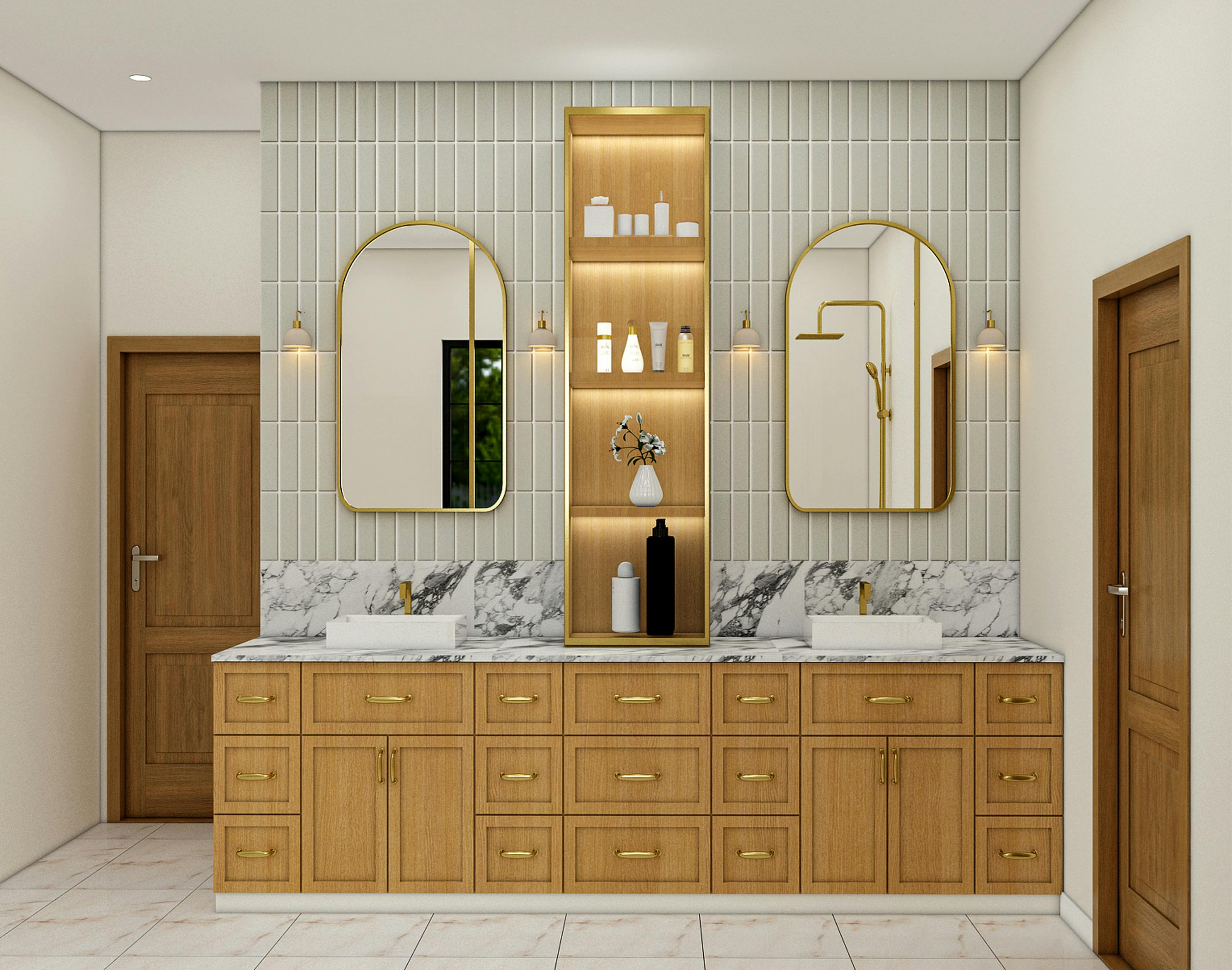
Layout Considerations That Affect Storage
Cabinet choices are closely tied to layout. Even well-designed units can feel awkward if the placement does not suit the room.
Wall space is often the biggest constraint. Windows, doors, and fixtures reduce the available area for cabinetry. In some cases, this makes vertical storage more effective than wider units.
Depth is another factor. Cabinets that are too deep can restrict movement, particularly in narrow bathrooms. Shallower cabinetry can still provide useful storage while keeping pathways clear.
Symmetry also plays a role in larger bathrooms. Matching vanities or balanced cabinet placement can create a more cohesive look, especially in shared spaces.
Can Kitchen Cabinets Work in Bathrooms?
Kitchen cabinets are sometimes used in bathroom renovations, particularly when standard bathroom sizes do not suit the space.
They can offer more flexibility in width and configuration, which is useful for long or unusually shaped bathrooms. However, they are often deeper and taller than typical bathroom cabinets, so adjustments may be required to ensure comfortable use.
Materials and finishes also need to handle humidity. Bathrooms experience higher moisture levels, so cabinetry should be properly sealed and suited to wet areas.
A bathroom renovator can help assess whether adapting kitchen cabinetry is appropriate for your layout.
Choosing Materials and Finishes
Cabinet materials affect durability and maintenance as much as appearance.
Moisture-resistant boards and sealed finishes are standard in bathrooms. Timber-look finishes add warmth, while painted cabinetry can introduce colour or contrast.
Lighter tones tend to make smaller bathrooms feel more open, while darker cabinetry can add definition in larger spaces. Matte finishes offer a softer look, while gloss surfaces reflect light and are easier to wipe clean.
Hardware choices such as handles or handle-free designs also influence the overall style. Subtle details can change how modern or traditional the cabinetry feels.
Storage Features That Improve Everyday Use
Small design decisions often make the biggest difference in daily use.
Soft-close drawers reduce noise and wear over time. Internal organisers help keep smaller items accessible rather than lost in deep cabinets. Pull-out trays can make lower storage easier to reach.
Open shelving can complement closed cabinetry, providing space for frequently used items or decorative touches. A mix of open and closed storage tends to work well in most bathrooms.

Making the Most of Larger Bathrooms
In larger bathrooms, storage can extend beyond standard cabinetry.
Wall-to-wall units or floor-to-ceiling cabinetry can create a more built-in look while increasing capacity. These solutions are particularly useful when there is no separate linen cupboard nearby.
In long bathrooms, combining a double vanity with a tall cabinet or additional side storage can help distribute storage evenly across the room.
When to Consider Custom Cabinetry
Custom cabinetry becomes relevant when standard options do not suit the space or when a more tailored finish is required.
Irregular layouts, sloped ceilings, or specific storage needs often benefit from a custom approach. It allows cabinetry to fit precisely within the available space and align with the overall design.
While it involves a higher upfront cost, it can improve both functionality and long-term usability.
Why Professional Installation Matters
Bathroom cabinetry is closely connected to plumbing, waterproofing, and layout planning. Incorrect installation can lead to issues such as poor alignment, moisture damage, or inefficient use of space.
Working with experienced bathroom renovators ensures that cabinetry fits properly, functions as intended, and integrates with other elements of the renovation.
Homeowners can compare quotes from trusted professionals on platforms like ServiceSeeking.com.au to find bathroom renovators who match their project requirements and budget.