Learn how to approach bathroom tile selection, from materials to layout, and get a result that suits your space and holds up over time.
Bathroom tile selection shapes how the space looks, feels, and performs over time. For homeowners, the process goes beyond choosing something that looks good in a showroom. Lighting, layout, material, and maintenance all play a role in how tiles will actually work in your home. With a clear approach, it becomes easier to narrow down options and avoid mismatched finishes or impractical choices.
This guide breaks down the key factors to consider so you can make informed decisions and move forward with confidence.
Start with the Overall Look and Feel
Before comparing samples, decide how you want the bathroom to feel. A calm, neutral space calls for a different palette than something more textured or layered.
Lighter tones such as off-whites, soft greys, and warm neutrals tend to hold up over time and adapt well to changing styles. Darker or highly saturated colours can work in specific settings, though they tend to show water spots, soap residue, and wear more easily.
Always review tile samples in your actual bathroom. Natural and artificial lighting can shift colour significantly throughout the day. What looks balanced in a showroom may appear cooler, warmer, or flatter once installed.
When combining colours, keep the palette controlled. Using too many competing tones across walls and floors can make the space feel smaller and less cohesive.
Choose Materials That Suit the Space
Material selection affects durability, comfort, and maintenance. Not all tiles perform the same way, especially in wet areas.
- Porcelain tiles are a common choice for floors due to their density and low water absorption. They handle moisture well and are suitable for high-traffic bathrooms.
- Ceramic tiles are often used for walls and feature areas. They are generally lighter and easier to shape, though not as hard-wearing as porcelain.
- Natural stone such as marble or travertine offers variation and texture. It requires sealing and ongoing care to maintain its surface.
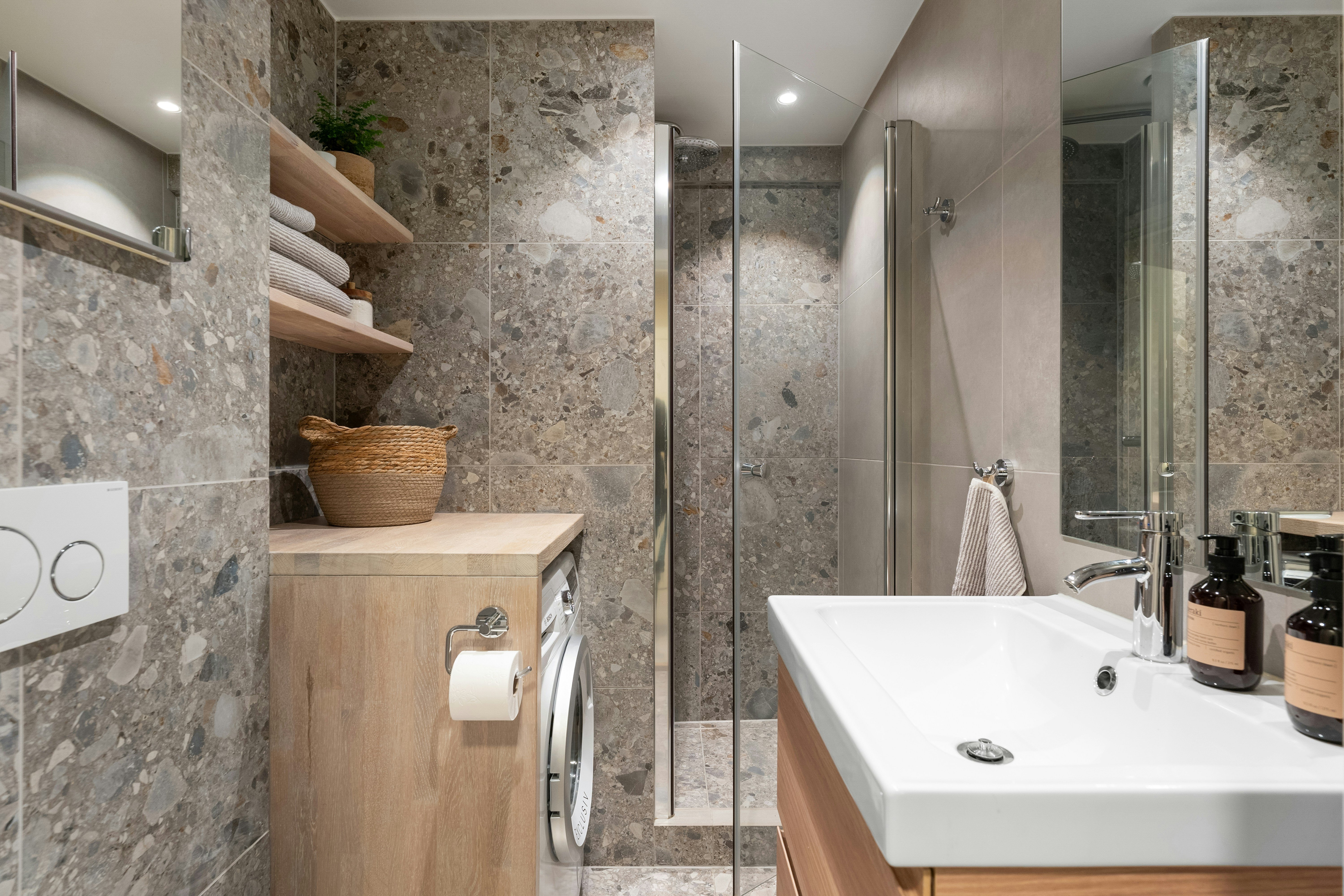
- Terrazzo provides a patterned finish that can tie multiple colours together while remaining relatively durable.
Matte or honed finishes are often preferred in bathrooms. They reduce glare, feel less slippery underfoot, and tend to hide marks better than high-gloss surfaces.
Consider Tile Size and Shape
Tile size influences how spacious or compact a bathroom feels.
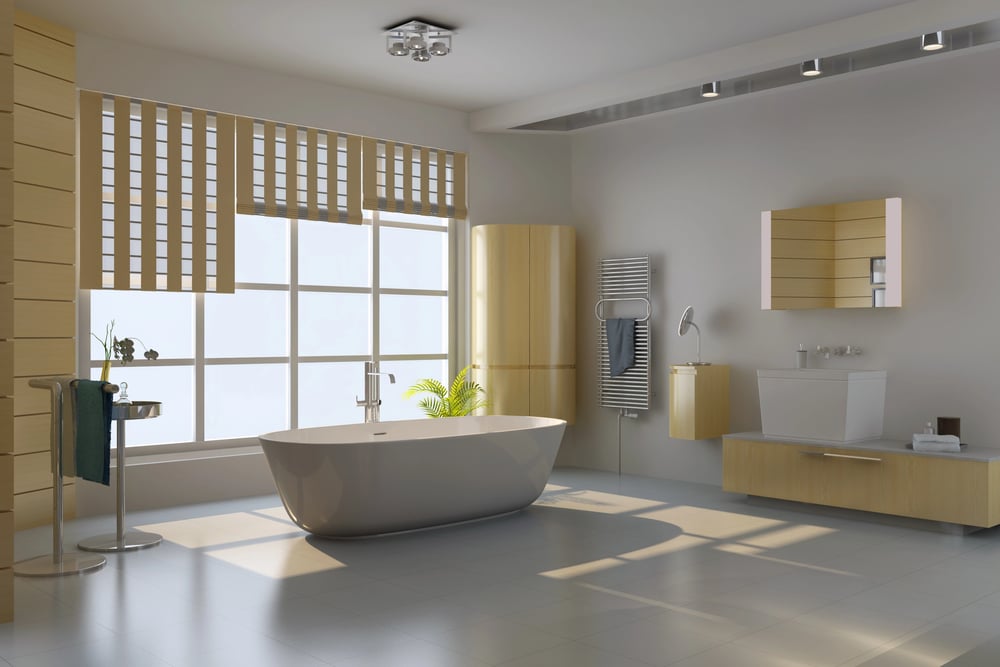
- Large-format tiles can make smaller bathrooms appear more open by reducing grout lines.
- Smaller tiles introduce more detail and texture but may require more upkeep due to additional grout.
- Rectangular tiles can be arranged to guide the eye and shape the perception of the room.
- Square tiles offer a more uniform, structured look.
If maintenance is a concern, especially in shower areas, fewer grout lines can make cleaning more manageable. This is one reason many homeowners opt for larger tiles on walls and floors, with smaller formats reserved for specific features like niches or shower floors.
Use Layout to Influence Space
Tile placement is not only decorative. It can also change how the room is perceived.
- Horizontal layouts can make a narrow bathroom feel wider by extending sightlines across the room.
- Vertical stacking draws the eye upward, which can help a bathroom with lower ceilings feel taller.
- Consistent tile direction across walls and floors creates a more unified look.
- Zoned layouts can define areas, such as using a different orientation inside the shower.
Keeping one dominant tile colour per wall can help maintain a sense of openness. Multiple contrasting colours on a single wall may break up the visual flow and make the space feel more confined.
Think About Texture and Surface Detail
Texture plays a quieter role than colour but has a strong impact on how the space feels.
Subtle surface variation, such as stone-like finishes or softly patterned tiles, adds depth without overwhelming the room. Textured tiles, including fluted or curved designs, can be used on feature walls to introduce movement while keeping the rest of the bathroom more restrained.
For floors, slip resistance is a practical factor. Tiles with a slightly textured or matte surface provide better grip in wet conditions compared to polished finishes.

Plan the Floor and Wall Relationship
A balanced combination of floor and wall tiles helps tie the room together.
One approach is to select a floor tile with variation, such as a stone-look or terrazzo design, then pull a lighter tone from that tile for the walls. This keeps the palette connected without repeating the same pattern across every surface.
Alternatively, a simple wall tile can act as a backdrop, allowing the floor to carry more visual interest. This works well in bathrooms where you want a clean look without losing detail.
If wallpaper or painted surfaces are included, make sure they sit comfortably within the same colour range as the tiles.
Factor in Fixtures and Finishes
Tiles do not exist in isolation. They interact with cabinetry, tapware, and fittings.
- Timber vanities can soften tiled surfaces and introduce warmth.
- Neutral metal finishes such as chrome or brushed nickel tend to blend in rather than stand out.
- Strong contrasts in hardware can draw attention away from the tile layout.
Keeping finishes consistent across the bathroom helps avoid a fragmented look.
Account for Maintenance and Longevity
Bathroom tiles should be selected with daily use in mind.
Grout lines, surface texture, and tile finish all affect how easy the space is to maintain. Lighter grout may require more frequent cleaning, particularly in high-use showers. Larger tiles can reduce the number of joints, making upkeep simpler.
Durable materials and restrained colour choices tend to age better and are less likely to feel out of place over time.
Bringing It All Together
Bathroom tile selection works best when decisions are made in relation to the whole space rather than in isolation. Colour, material, layout, and finishes all need to align with the size of the room and how it is used.
For homeowners planning an update, working with experienced bathroom renovators can make this process more straightforward. A professional can assess your space, recommend suitable materials, and ensure tiles are installed correctly for long-term performance. On ServiceSeeking, you can compare quotes and connect with renovators who understand how to bring these elements together in a way that suits your home.