Home Security
Yes, and it's key to getting your home ready for the warmer months. Here's what homeowners should know about cleaning gutters in spring.

Yes, spring is a good time to clean your gutters. After months of winter rain, wind and falling leaves, your gutters can be packed with debris that stops water from draining properly.
Cleaning your gutters in spring can help you spot blockages, leaks and damage before the heavier rainfall and storms of the warmer months arrive. It can also be a good opportunity to check whether your gutters and downpipes are still working as they should.
Gutter cleaning is just one part of getting your home ready for the warmer months. For a complete checklist, see our spring home maintenance checklist.
Here's what Australian homeowners should know about cleaning gutters in spring.
1. Why should you clean your gutters in spring?
Your gutters are designed to collect rainwater from your roof and direct it safely through the downpipes and away from your home.
When they're filled with leaves, twigs, dirt and other debris, water can't flow as freely. This can cause gutters to overflow, potentially contributing to water damage around your roof, walls and foundations.
Spring is a useful time to clean them because winter weather may have left behind a build-up of debris. Cleaning them before storm season also gives you a chance to identify problems while they're still relatively easy to address.
2. What happens if you don't clean your gutters?
Blocked gutters aren't just an eyesore. They can cause several problems around your property.
Depending on your home's design and the severity of the blockage, overflowing water can contribute to:
- Roof and fascia damage
- Water stains and dampness
- Mould
- Damaged exterior walls
- Erosion around the home
- Garden and landscaping damage
- Sagging or damaged gutters
Debris can also become heavy when it gets wet, putting additional weight on guttering that may already be damaged or poorly supported.
Regular maintenance helps reduce the chance of these problems developing.
3. Check for leaves and other debris
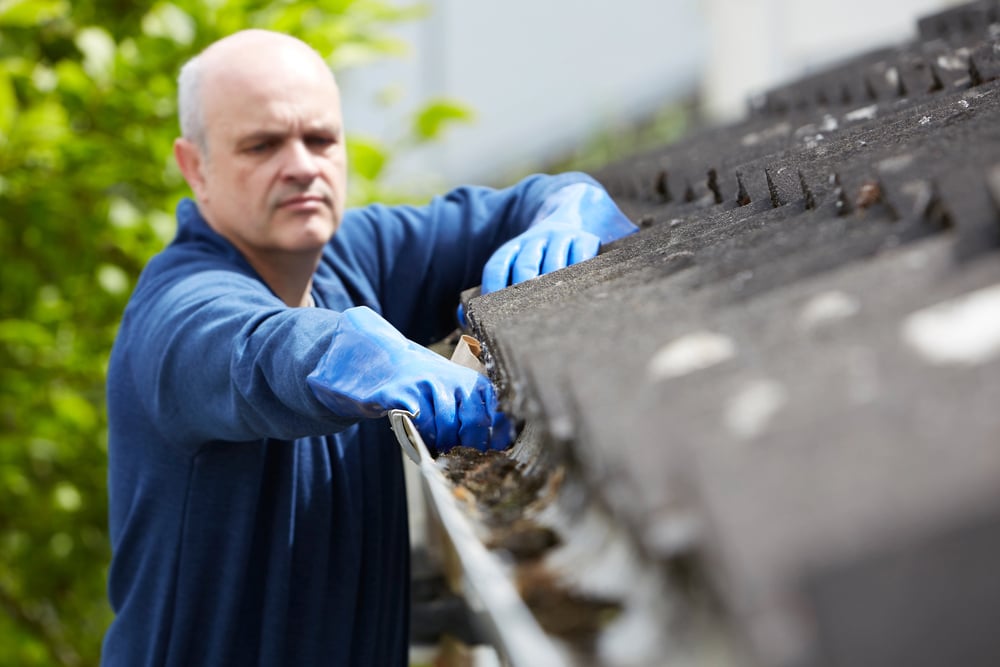
The first thing to look for is obvious debris.
Leaves, sticks, seed pods and dirt can collect in gutters over time, particularly if your home is surrounded by trees.
Remove accumulated debris and check whether anything has become lodged around gutter outlets or downpipes.
If your property has large trees nearby, you may need to clean your gutters more frequently than a home with little vegetation around it.
4. Don't forget the downpipes

Cleaning the gutters isn't enough if your downpipes are blocked.
Once the gutters are clear, check that water can flow freely through the downpipes. A blockage lower down can cause water to back up into the gutter, even when the gutter itself looks clean.
If you're comfortable doing so, check the visible sections for obvious blockages and make sure water is draining away from the house as intended.
Persistent blockages may require a professional plumber or guttering specialist to investigate.
5. Look for damaged or sagging gutters
Spring cleaning is also an opportunity to inspect the condition of your guttering.
Look for sections that are sagging, pulling away from the roofline or holding water rather than allowing it to flow towards the downpipes.
You should also check for:
- Cracks and holes
- Rust or corrosion
- Loose brackets
- Damaged joins
- Gaps between sections
- Loose or damaged downpipes
Cleaning won't solve these problems, so make a note of anything that needs repair or replacement.
6. Check where your gutters meet the roof
Your gutters and roof work together to manage rainwater, so it's worth checking the area where they meet.
From a safe position on the ground, look for obvious gaps, damaged roofing materials or debris collecting along the roof edge.
You may also notice water stains or dampness inside the roof cavity if there has been a persistent problem.
Don't climb onto your roof simply to inspect the gutters. Roofs can be slippery and dangerous, particularly after wet weather. If an area is difficult to reach safely, get a professional to inspect it.
7. Check for signs of overflowing water
Your home may show you where your guttering has been struggling.
Look around the exterior walls and ground below your gutters for signs of repeated water overflow.
You might notice:
- Water stains
- Peeling paint
- Damp patches
- Soil erosion
- Excessive moss or mould
- Damaged garden beds
These signs don't necessarily mean the gutter itself is the only problem. The issue could be a blockage, insufficient drainage, damaged guttering or another part of your home's stormwater system.
If you're unsure, it's worth having the problem assessed before the next major rainfall.
8. How often should gutters be cleaned?
There's no single schedule that works for every Australian home.
How often you need to clean your gutters depends on factors such as the number of trees around your property, the type of roof and guttering, local weather conditions and how quickly debris accumulates.
Homes surrounded by trees may need more frequent cleaning, while properties with fewer nearby trees may require less.
Rather than relying solely on a calendar, keep an eye on your gutters and arrange a clean when you notice significant debris or signs of poor drainage.
9. Is it safe to clean gutters yourself?
For a single-storey home with easily accessible gutters, some homeowners may choose to handle basic cleaning themselves.
However, working at height comes with real risks. Ladders can become unstable, and roofs can be slippery or difficult to navigate.
You should also be particularly careful around powerlines and avoid working near electrical hazards.
If your gutters are high, steep, difficult to access or heavily blocked, hiring a professional is generally the safer option.
A professional gutter cleaner can also inspect the guttering while cleaning it and flag damage that you may otherwise miss.
10. When should you hire a professional?
Consider getting a professional gutter cleaner or appropriate tradie if:
- Your home is more than one storey
- Your roof is steep or difficult to access
- Gutters are heavily blocked
- You notice leaks or damaged sections
- Gutters are sagging or pulling away from the roof
- Downpipes appear blocked
- You're uncomfortable working at height
- Your property has difficult access
Getting the job done professionally can save you the hassle of handling a ladder while giving you an opportunity to have the guttering checked at the same time.
11. What else should you check while cleaning gutters?
Gutter maintenance is a good starting point for a broader spring inspection.
While you're checking your roofline, look for obvious signs of winter damage, including damaged roof tiles, loose materials, deteriorating fascia and water stains.
You can then move on to other areas of the property, such as windows, exterior walls, decking, fences and drainage.
For more ideas, use our guide to checking your home for winter damage as part of your spring maintenance routine.
Taking care of several small jobs at once can make it easier to prepare your home before summer.
12. Get your gutters ready for storm season
Spring is about more than making your home look tidy. It's an opportunity to make sure your property is ready to handle the weather ahead.
Clean gutters can help rainwater move away from your roof as intended, while an inspection can reveal damaged sections that need attention.
If your gutters need more than a basic clean, you can find local professionals through ServiceSeeking.com.au. Post your job, receive quotes and compare your options before choosing a tradie to get the work done.
Don't wait for a blocked gutter to become a bigger problem
Cleaning your gutters in spring is a simple maintenance job that can help you stay ahead of blockages, water overflow and potential damage.
Once you've finished your gutter check, keep working through your wider spring home maintenance checklist. Checking your roof, gutters, drainage and other parts of your property now can help you spot problems before they're made worse by summer storms.
And if your gutters are too high, damaged or difficult to access safely, leave the ladder at home and get a professional to take care of them instead.